A Different Kind of Machine
A quiet look at a different kind of espresso machine — and how it changes the way you work, move, and pay attention behind the bar.
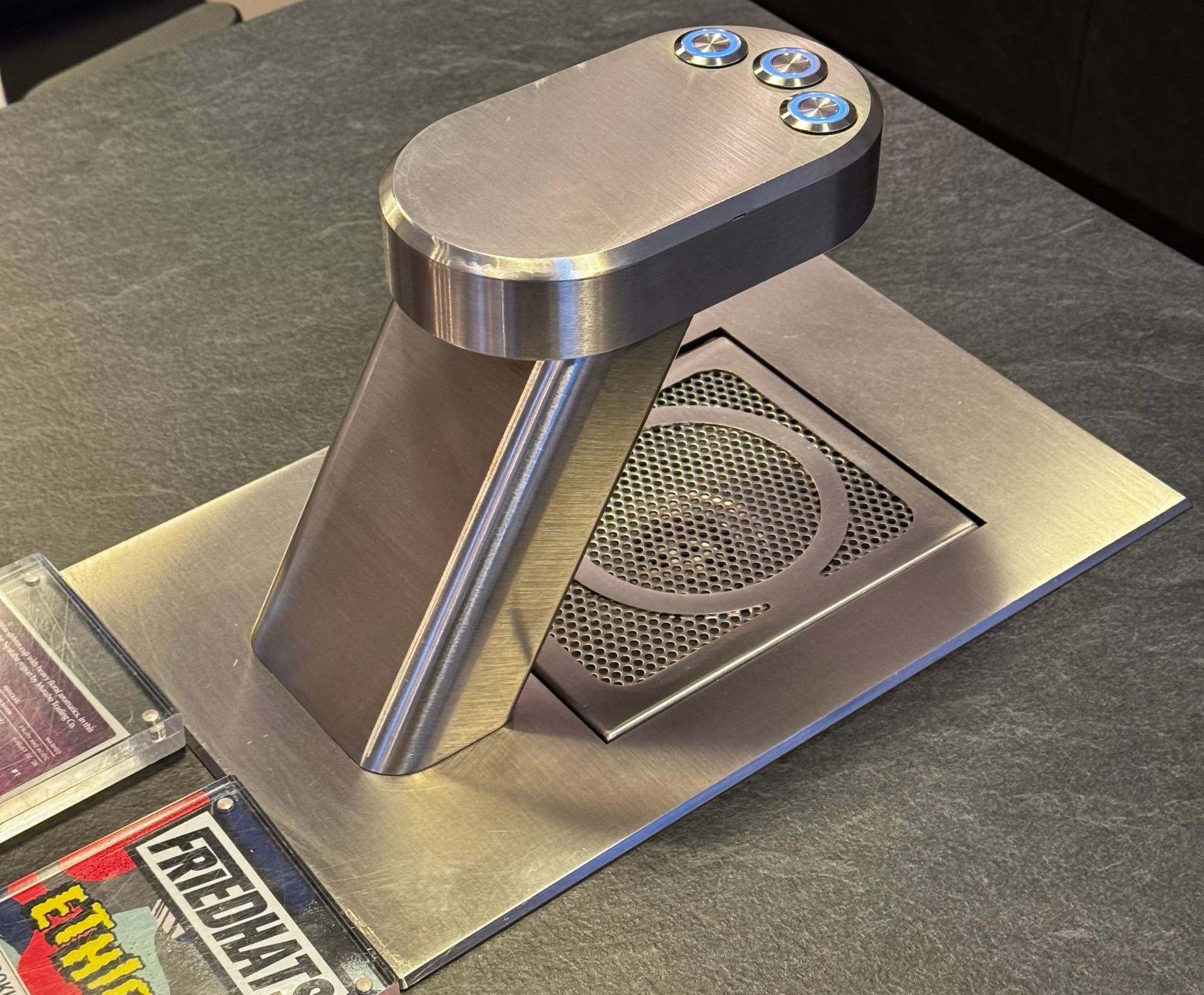
From the guest's side, Mavam raises a simple question: where does the coffee even come from? There's no visible group head, no portafilter, no familiar ritual — just a tap with three buttons. People try to figure it out on their own or decide it must be some magic. I wasn't an exception. For a long time, I couldn't quite understand how it worked, or how you'd even begin to dial it in. Then I came in for a trial shift, and it became clearer — and at the same time, more interesting.
The machine itself is roughly the size of a standard two-group espresso machine, sitting under the counter. What the guest sees is only the surface. Behind it — a touchscreen, and two Mahlkönig E65 grinders running side by side. The first carries SSP High Uniformity burrs, tuned for body and sweetness. The second runs SSP Multi Purpose — cleaner, brighter, built for more acidic or experimental lots that rotate every 3 or 4 days. Everything is there, just hidden.
What makes it different isn't only the construction. It's how it feels to work with it. The workflow doesn't resemble anything else — simple, clear, but unfamiliar at first. Once the parameters are set, the machine holds them without needing constant attention. At the same time, it opens up very fine adjustments — the kind Thomas works with constantly, refining each coffee as the lineup changes. I dial in new lots myself now, often within the flow of a regular shift. After a few attempts, it becomes intuitive. Almost too intuitive, like a system that already understands what you're trying to do.
The steam wand took the most adjustment. It has a custom nozzle — a specific tip design that behaves differently from anything standard. It took time to trust it. Now the milk is probably the best I've produced consistently.
Over time, something shifts in how you work. You become calmer, more attentive. On a quiet day, the machine lets you focus on the smallest details. On a busy day, it holds the structure — you press start, steam milk, pour, repeat, and it doesn't fall apart. There are no coffee grounds scattered across the bar, no constant wiping and resetting. Tamping is handled internally, which also means more consistent extraction. But it never feels sterile. Coffee still behaves like coffee — slightly unpredictable, still alive.
Guests notice. They look, they ask. Even people deep in specialty coffee — the ones who've seen everything — stop and question it. What is this? How does it work? On Instagram, when I post extraction videos, people who are genuinely in the industry ask the same thing. It starts conversations without trying.
And the bar itself changes. Cleaner, more open, nothing standing between the barista and the guest. It becomes something like a stage — not in a performative sense, but in the sense that everything unnecessary disappears. The machine is part of that scene, not behind it.
This kind of thinking isn't isolated. NOMA in Copenhagen — the Michelin-starred restaurant — chose La Marzocco Modbar for their coffee program. Also under-counter. There's a direction here: towards clarity, towards removing visual noise, towards letting the work speak without the equipment getting in the way. Just as lighter roasts changed how coffee tastes, these machines are changing how it's made and how it's seen.
It's not perfect. Temperature is the honest limitation — it depends heavily on grinder heat and the internal piston, where extraction actually happens. We use 98° water; by the time it reaches the cup, it's closer to 93°. You learn to work with it, to account for it. In a high-volume environment, though, Mavam holds its temperature more steadily than most — no sudden drops from idle time, no recovery lag. That consistency matters more than the gap itself.
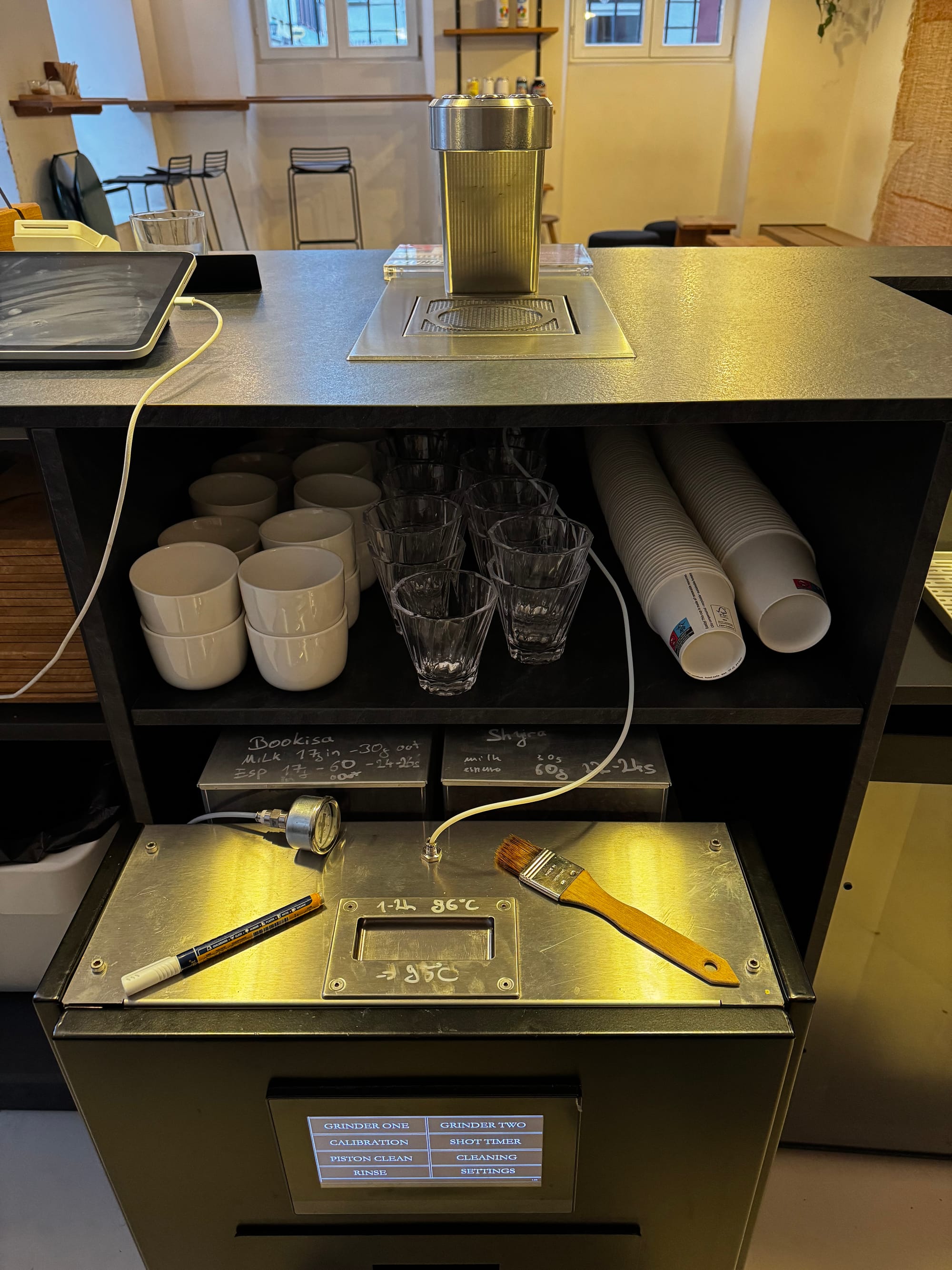
What stays is a feeling of comfort and control. The machine does its job reliably and quietly. Because of that, you can pay more attention to what actually matters — the taste, the aroma, the texture. The cup in front of you.