Coffee Elsewhere
Australia, Volume I — Julia
Some people plan their way into coffee. Others just end up there.
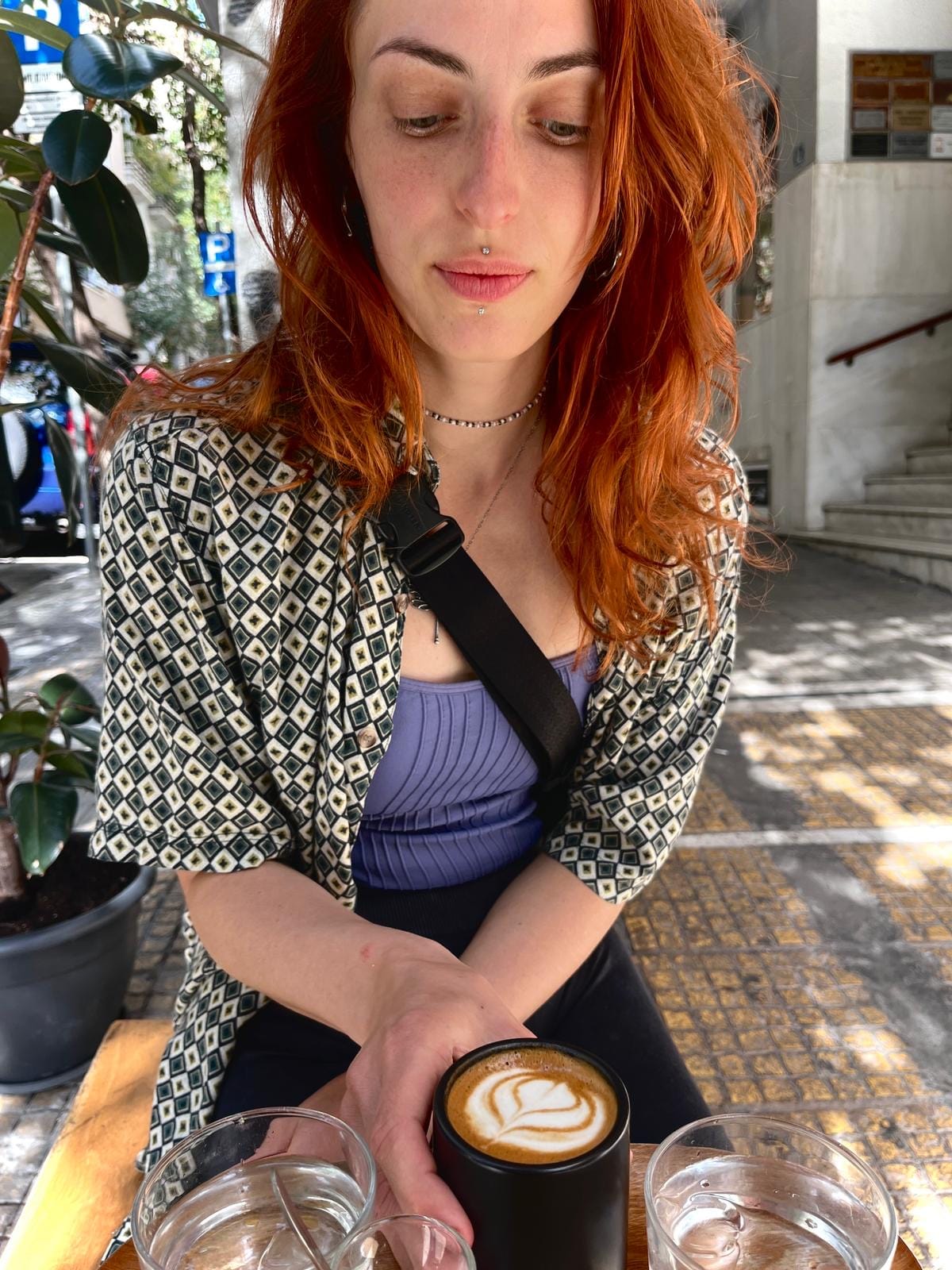
Julia ended up in Australia needing a job. The answer came quickly — barista work is everywhere, and it pays well enough that it makes sense even without much experience. You meet baristas constantly. It's one of those professions that feels almost built into the fabric of daily life.
She landed at a service station almost by accident. The owner was quietly obsessed with coffee — obsessed enough that people from neighbouring villages drove in just to get a cup from him. He offered to train her. She said yes. And for two years, that was the job.
"There was no pressure to make perfect latte art," she says. For a beginner, that matters more than it sounds. Latte art is usually the thing that breaks people early — the gap between what you can pour and what looks acceptable is wide, and most places don't give you time to close it. Here, there was space to learn without that particular anxiety hanging over every shift.
The beans came from a local roastery — decent, not specialty, but honest. On the East Coast at that time, specialty coffee wasn't really part of the conversation outside the biggest cities. Good coffee existed, but it looked different from what the specialty world was building elsewhere.
She was there in 2017 and 2018, then came back again in 2020. The right place to start — and one that taught her more than she expected.
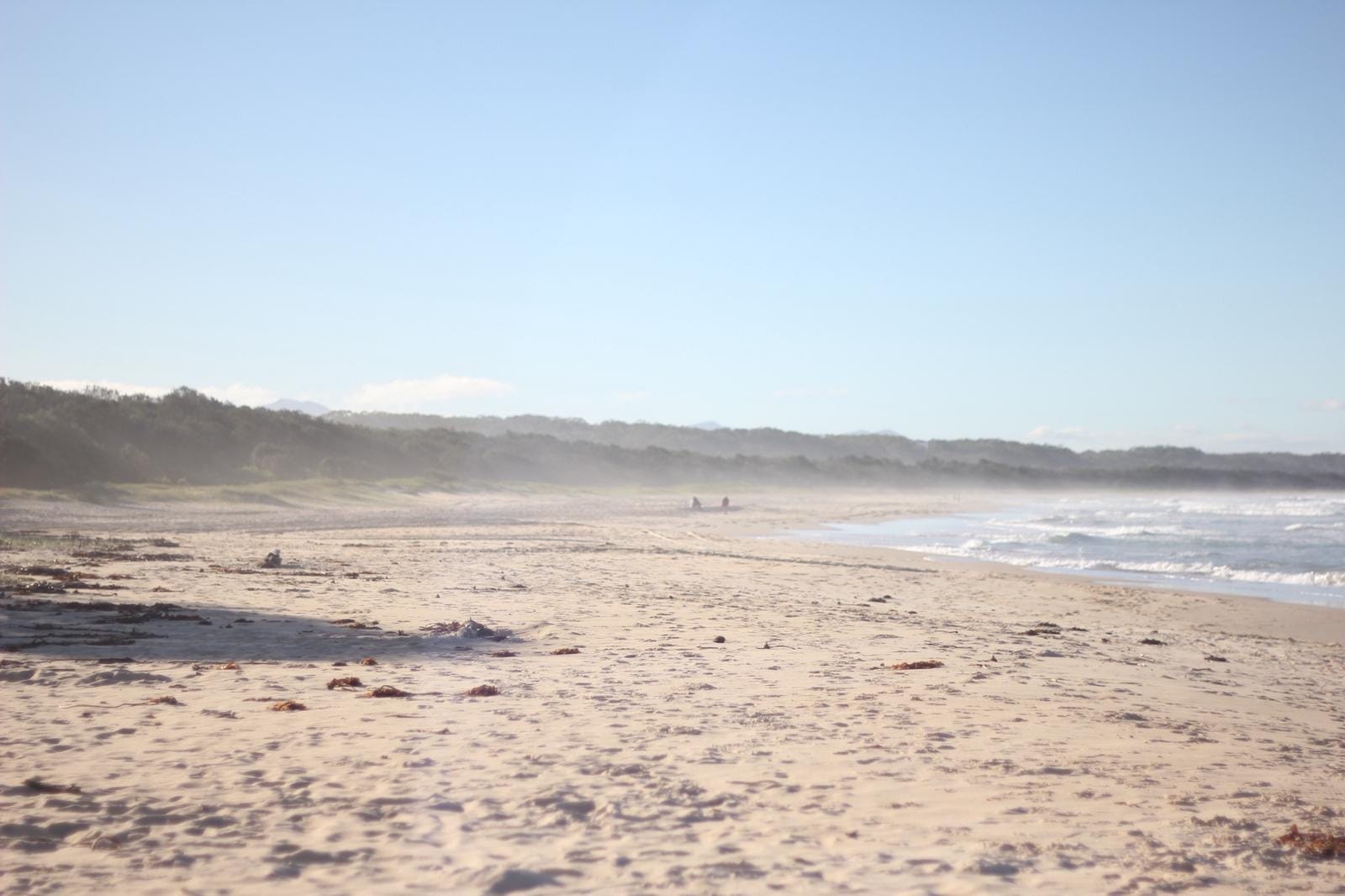
All of this is one perspective, from one part of a very large country — Bellingen, New South Wales, countryside, hours from the nearest big city. Australia is enormous, and culturally consistent in many ways, but the experience of coffee shifts depending on where you are.
6 am
One of the first things you notice about Australian café culture, if you're coming from Europe, is the hours.
Cafés open at seven in the morning — sometimes half past seven. Six o'clock openings exist, but that's more the territory of service stations and petrol stops, where tradespeople and early workers pull up before the rest of the town is moving. The rush hits between six and ten — people grabbing coffee before work, on their way somewhere, standing at a counter for thirty seconds before they disappear. By three in the afternoon, most places are closed.
"It's a morning thing," Julia says. "People drink coffee in the morning. In the afternoon, maybe at home. Or not at all."
This sounds simple, but it changes everything about how the job feels. You're not pacing yourself across a twelve-hour day. You're compressing all of it — the volume, the pressure, the decisions — into a few hours. And then it's over. Early mornings, but also early endings.
The most popular drink isn't what Europeans might expect. Forget the americano — Australians genuinely don't like it. The default is a long black: hot water in the cup first, espresso poured on top. Not the other way around. The order is what really matters. Make it backwards, and a regular guest will notice immediately.
After that: flat white, latte, cappuccino. In that order.
Milk Is Not a Detail
If there's one thing that defines Australian coffee culture — and Julia is clear about this — it's the relationship with milk.
Not with beans. Not with extraction. With milk.
"Every drink has a different texture," she explains. "A flat white has the least. A cappuccino has the most. If you make a flat white and the milk is slightly more bubbly — like a latte — people complain."
Australians and New Zealanders don't joke about milk texture. It's not pickiness. It's precision. They grew up in a culture where the difference between a flat white and a latte is real, and they can feel it in the cup.
The irony, though, is that this precision stops at milk. "Everyone praises Australia for its coffee culture," Julia says. "And yes, you get decent coffee at most places. But mainly because they know how to texture milk and do latte art. Most of it is very commercial — omni roast beans, the kind designed to work in every brewing method and offend nobody. Most people don't even know what kind of coffee they're drinking."
This is what she observed in her time there — 2017, 2018, and again in 2020. Whether the picture has shifted since is a different conversation, and probably a different volume.
I've seen it from the other side too — working in Germany, you notice fast when someone from that culture orders a coffee, and the milk isn't quite right. They notice before you do.
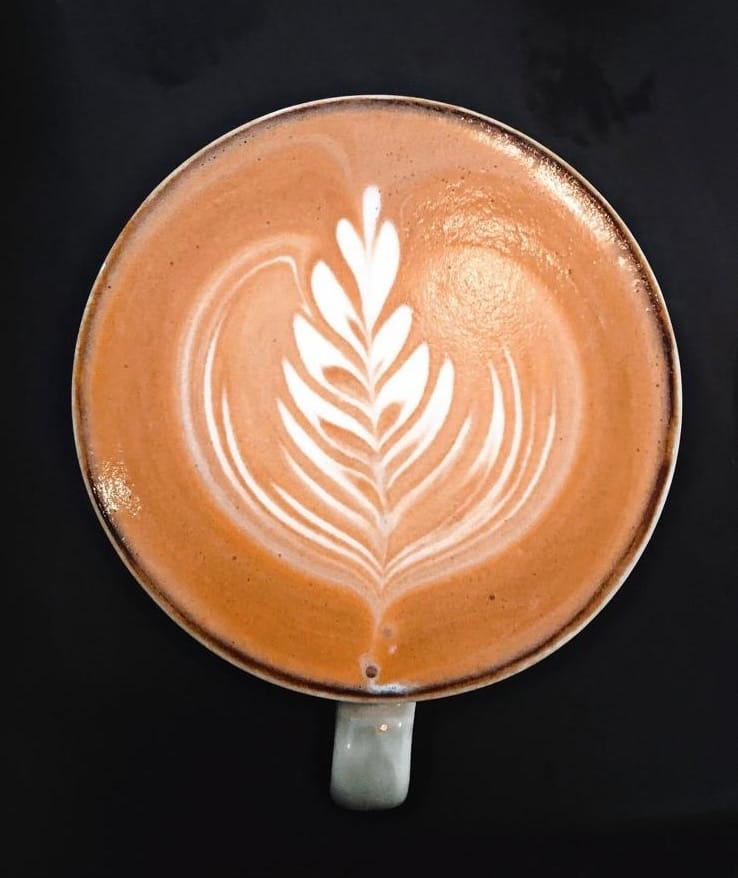
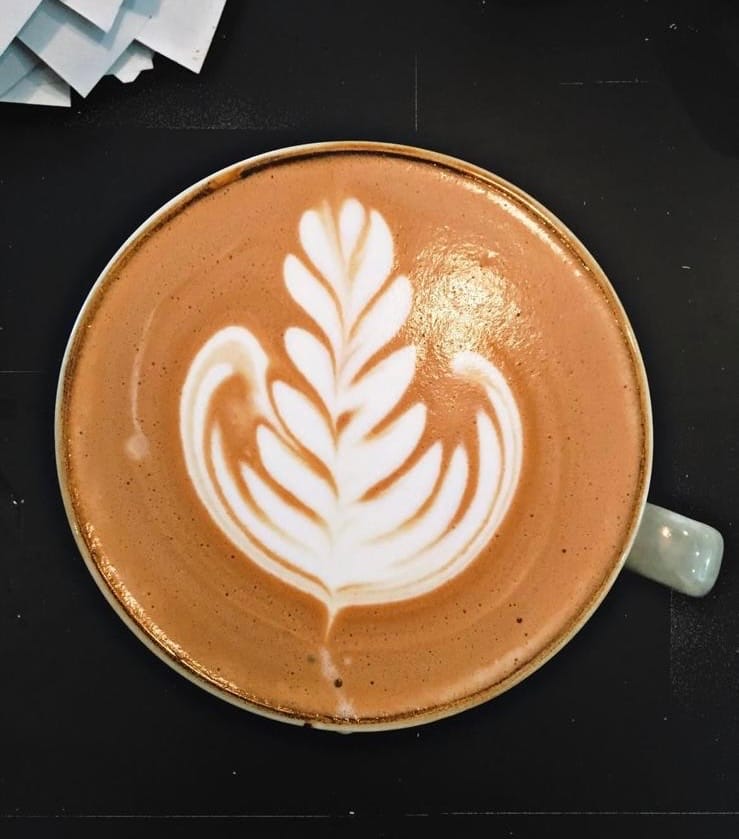
And yet. The café culture itself is something else entirely. Filter coffee is almost nowhere to be found — which, for anyone in specialty coffee, is usually a clear indicator of how deep the interest actually goes. But step back from that, and the picture is more generous. Vegan food, gluten-free options, kombucha on the menu — not as an afterthought, but as a standard. Small towns with ten cafés on one street, each of them making decent latte art and using good local milk. Access to a nice cup of coffee, even in the middle of nature.
It's a different kind of development. Not built around origin or extraction, but around the experience of the place — the food, the atmosphere, the ritual of the morning coffee. A beautiful café scene, just pointed in a different direction.
The Rush
A typical shift isn't just busy. It's structurally designed for speed.
Because cafés are only open for a few hours, every customer arrives at the same window. There's no quiet period to breathe. Companies call ahead — fifteen coffees, ready in half an hour — while the normal queue keeps moving. You press start, steam milk, pour, repeat.
In that rhythm, there isn't much room for the kind of micro-adjustments that happen in serious specialty environments — the constant dialling in, the shot tasted before the first customer arrives, the grinder setting tweaked mid-shift. Not because the care is absent, but because the volume leaves almost no room for it.
Most cafés also work through roastery partnerships: a supplier sends someone down every few weeks to calibrate the machine and set the parameters. The café follows the recipe. The barista executes it.
But here's the thing — the general level is just high. In Europe, the gap between a serious coffee shop and an average café is enormous. In Australia, that gap is much smaller. The neighbourhood spot does decent latte art. The milk is good, often from local farms. The flat white tastes like a flat white. It's not about specialty or not specialty — it's about a culture where the baseline across thousands of cafés, in small towns and suburbs alike, is simply higher than almost anywhere else.
The volume is what makes the deep work harder. But it's also what built the culture in the first place.

What the Work Is Worth
One of the things you hear most often when baristas talk about Australia is the money. It comes up almost immediately — not as a complaint about Europe, but as a genuine contrast that's hard to ignore.
Twenty-eight Australian dollars an hour on weekdays. Thirty-five on Saturdays. Forty to forty-five on Sundays and public holidays. At the time, that was roughly double what a barista earns in Germany for the same shift.
"When I came back to Germany," Julia says, "it was so unusual to not get any extra pay on Sundays. Like, this was just a very respectful thing."
The money matters not just because of what it buys. It matters because of what it signals. A job that pays well is taken seriously — by the employer, by the industry, and eventually by the person doing it.
In Europe, that signal is largely absent. Someone asks what you do, you say barista, and there's a pause. Oh. But what else? The assumption is that coffee is a placeholder — something you do between real things.
In Australia, that conversation is different. The coffee industry there is understood as an industry with its own standards, its own craft, its own demands. People who work in it are doing real work. Not a side job, not a student gig, not something you do until something better comes along. The culture around coffee shaped that understanding, even if it arrived through milk texture and morning rushes rather than through light roasts and tasting notes.
The work is the same everywhere. But one culture built a framework that respects it, and the other is still working on that part.
What to Bring Back
I ask her one last question: What would you bring back from Australia to Europe?
"That's a good question," she says. Then, without much hesitation: "The appreciation for coffee in general."
Not the technique, not the volume, not the hours. The way people there respond when someone is genuinely dedicated to what they're making. A good flat white, made with care — Australians notice. They say something. They come back.
"If someone is dedicated to a good flat white, Australians are the first people who would appreciate it, respect it, and compliment you for your work," she says.
It's not that people in Europe don't care. But the feeling is different. The default there is respect. Here, it still has to find its way.
She was back in Australia in 2024 and noticed little had changed in the smaller towns. Or maybe things were shifting quietly, somewhere just out of sight.
The recognition. The idea that someone who opens at six so you can have something good before work, who knows how to texture milk correctly, who does this every single day, is doing something worth noticing.
Some places in Europe already understand that. Just not enough of them yet.
Julia worked as a barista in Bellingen, New South Wales, across two separate stays — 2017–2018 and again in 2020.
Coffee Elsewhere is an ongoing series about what coffee looks like when you take it somewhere else — or bring it back.