Light – lighter – ultra-light
There is something slightly strange happening with light roast.
I have been thinking about it for a while now. Not only because I drink more and more very lightly roasted coffees myself, but because I have started noticing how quickly the definition of "light" seems to be moving.
A coffee that would have once been considered light can now be described as developed. A Nordic-style roast can suddenly feel almost dark to someone who spends enough time around ultra-light coffees. And somewhere further down that road, you start hearing that even coffees from roasters who helped define the modern idea of light roasting are, somehow, too dark.
I find that astonishing.
Mostly because I have noticed the same shift in myself.
There was a time when I was excited by almost anything that felt unusual. Funky fermentation, heavy processing, strange aromatics, coffees that seemed to challenge what coffee was supposed to taste like. I still appreciate those coffees. But increasingly, I find myself looking for something else.
Nowadays, cleanliness, sweetness, florality, clarity, and a certain softness please me more. I like coffees that can be extremely expressive without feeling aggressive. And this is where ultra-light roasting started making more sense to me. But there is another thing I have been thinking about.
How much of what we call taste is actually our own preference?
And how much of it is something we learn from the people around us?
Because specialty coffee has had a complicated relationship with progress. We want to move forward. We want better coffee, better processing, better roasting, better tools and understanding. But every time the boundary moves, a new normal appears.
And sometimes, what was once considered extreme becomes ordinary.
A coffee that was too dark
Recently I attended the opening of a roastery and a coffee shop. I had a good time there, talking with a team and trying new coffees — simply enjoying the atmosphere.
The next day I came back. The guests were gone, and we had time to actually talk and try some fresh coffees with the owner. And somewhere in between the cups, we started talking about what I was tasting in his coffee.
It had been roasted the day before. And immediately I noticed something I would describe as roasty — a brownness that sat at the front of the cup. It wasn't unpleasant because I was expecting it. But underneath it, there was a beautiful and floral coffee. But the roast was audible to me, and I could sense that the roaster was curious about what I thought.
I tried to describe it as honestly as I could.
He asked what exactly I meant by "roasty".
That question stayed with me.
Not because we disagreed — we actually understood each other quite well. We simply had slightly different reference points for what we considered a roasty taste. He had a tighter, more precise definition of it: something unbalanced, aggressive, with a browning note that pushed the cup in an unpleasant direction. What I meant was something quieter — only the presence of that brown character and its dominance.
Then he told me something that surprised me.
He had recently visited a workshop of a well-known roastery. Talking to someone there, he had described the roast profile he was planning — roughly around Prodigal, which we both know as a clean, defect-free, genuinely light roast. The person he was speaking to told him that, for them, that was already too dark.
That surprised him, and it surprised me too.
Because if a roast profile that sits comfortably inside the modern light-roast tradition is already considered too developed — where exactly does "light" begin?
And where does it end?
What is ultra-light?
The term is partly technical, partly cultural, and increasingly sensory.
One roaster I have been following closely describes their ultra-light collection as an approach designed to showcase the purest, vibrant, and delicate layers of flavor. They talk about explosive aroma, clarity, tension, a silky mouthfeel, refined acidity, dynamic flavor transitions, and a clean finish that evolves as the cup cools.
That description makes sense to me.
Ultra-light, at its best, isn't simply "less roasted".
It is an attempt to let something else become more audible. The coffee itself.
The logic is relatively straightforward, even if the execution is not. The more sugar gets caramelized — and eventually begins to burn, producing bitterness and those heavy brown notes that mask everything underneath. Organic compounds that carry flavor are transformed or lost. What you end up drinking is partly the coffee and its processing and partly the roast.
Light roasting preserves more of what was already there. Ultra-light roasting takes that further — keeping the terroir even more readable, the sweetness clean, the aromatics intact.
Quality comes with a price. It's often reached with expensive green coffees that allow them to be roasted that lightly, barely untouched. That's why the trust is so important and why I no longer flinch at paying more for a small lot. I know the roaster, I trust the approach, and what ends up in the cup justifies it. €20–40 for a 100g to 200g bag is not a small amount of money, but when you're sure that all descriptors written on the bag are going to end up in your cup, you simply buy it and never regret. Although it is niche and probably will be more or less a certain market for a certain buyer. But the reasons behind it are real, not fashionable.
When taste becomes a standard
This is where I start becoming less interested in roasting profile and more interested in people.
Because there is nothing strange about preferring ultra-light coffee.
I do too.
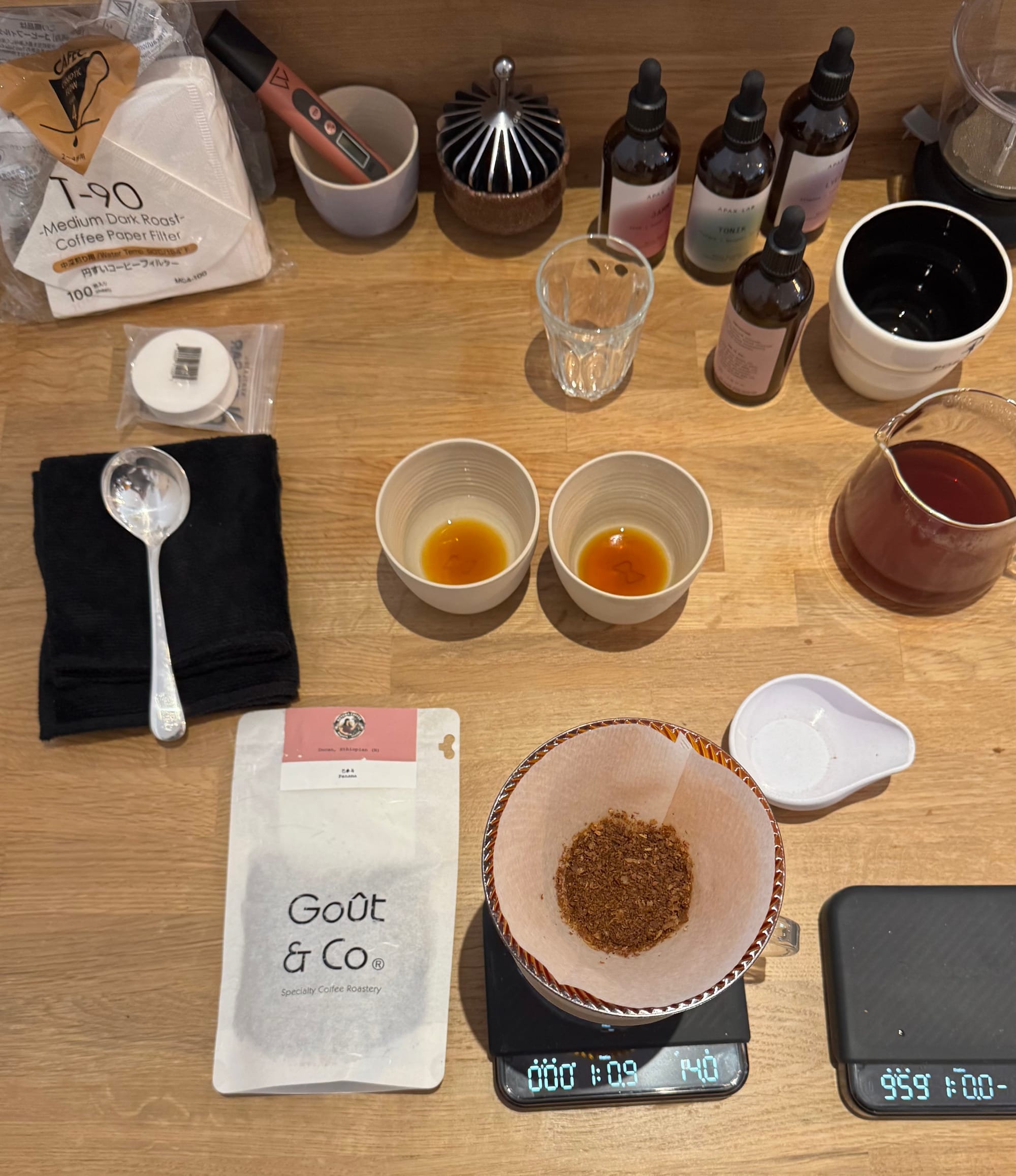
Recently I brewed a coffee at home — it was more on the funky side. The problem wasn't the processing. The problem was the roast. There was a roastiness that dominated everything, a burned brown note that pulled the cup somewhere I didn't want to follow. A year or two ago I probably wouldn't have noticed it as strongly. Now it was all I could taste.
My taste changed, and that's fine.
What becomes more complicated is when a personal preference turns into a standard for everyone else.
There is a difference between saying:
I don't enjoy this roast profile.
And saying:
This roast is too dark to be good.
The first is taste. The second starts to become a quality statement. And the two aren't the same thing.
Specialty coffee has always had an objective side to evaluation. We can talk about defects, roast development, balance, cleanliness, extraction, and consistency. Not everything about coffee is simply a matter of opinion.
But neither is pleasure.
A coffee can have qualities that are objectively impressive and still not be the coffee I want to drink. And a coffee I personally love can still have characteristics that another person reasonably considers flaws.
Maybe that is the uncomfortable part of becoming more knowledgeable. You start tasting more. But you also start carrying more expectations into the cup. And sometimes, without noticing, those expectations start to feel like requirements — for everyone.
Softer, not sharper
I asked Thomas about it because I wanted to understand whether what I was experiencing was simply my own preference or whether there was something more specific going on.
For him, one of the most difficult things to bring into the cup is florality. When an ultra-light roast is done very well, he finds it can reveal considerably more floral character than a conventional light roast. The aromatics become more floral, tea-like and elegant — quieter in acidity, more present in softness.
Contrary to what many people assume, ultra-light doesn't necessarily mean sharper or more acidic. If anything, Thomas experiences the acidity as less intense — more refined, less aggressive. What you get instead is a softness that can be easily mistaken for a lack of depth.
But delicacy is not the same as emptiness. A coffee can be very quiet and still have an enormous amount of flavor going on.
He also pointed out the other side. If an ultra-light roast is unsuccessful, the cup can fall flat. Without enough freshness or structure, the delicacy doesn't become complexity — it just disappears. And then there is something that I found particularly interesting: his sense that a well-roasted ultra-light coffee can have a surprisingly wide window of drinkability. Even if the extraction isn't quite right, the cup can remain soft, clean, and enjoyable. With some light roasts, the window is much narrower — a little too much and the cup becomes aggressive; a little too little and it loses its shape entirely.
That doesn't mean ultra-light is easier to brew.
It means that, when it works, the resulting cup can be remarkably forgiving to drink.
The moving line
What interests me most about ultra-light coffees is not whether they are better.
It is that the scale itself seems to be moving.
The coffee industry has become better at working with high-quality green coffee. Roasters have more knowledge, better tools, and more experience. Naturally, the boundaries move with them. What once felt exceptionally light becomes normal. What once felt normal starts to feel developed. And eventually someone looks at the new normal and says: still too dark.
Maybe this is simply what progress looks like.
Ultra-light is probably both the most advanced current expression of specialty roasting and partly a trend. Both things can be true at the same time. That doesn't make the trend meaningless. It doesn't make the quality less real.
I like ultra-light coffees for simple reasons.
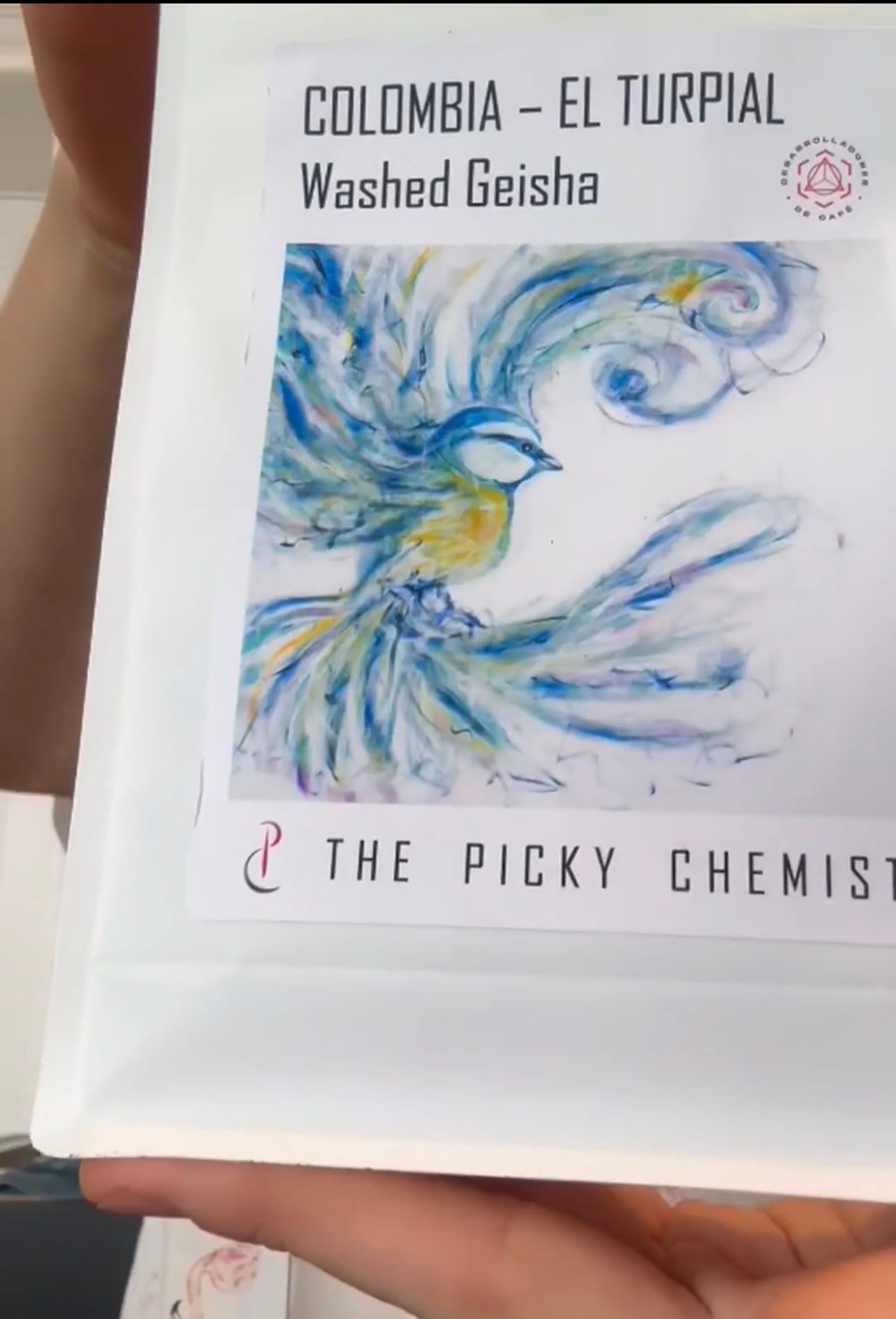
I like the flowers. I like delicacy and softness in the cup. I like how a coffee can have enormous aromatic depth without shouting. I like the way the cup changes as it cools. And I like that precision and gentleness can exist in the same drink.
But I also don't want ultra-light to become another way of deciding who belongs in the room.
There is something slightly ironic about a coffee culture built around curiosity becoming increasingly confident about what people are supposed to like. Gatekeeping is not a specialty coffee value. Neither is the idea that appreciating something rare makes you more serious than the person drinking a well-made cappuccino.
The conversation I had at the opening was a good one. Not because we agreed on everything, but because we were both honest about what we were tasting and why. That felt like enough.
Taste is subjective.
Quality is not entirely subjective.
And perhaps the interesting part is learning how to hold both ideas at the same time — without needing everyone else to arrive at the same answer.